
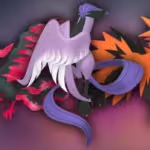
The Legendary Galarian Birds are arguably incredible additions to Pokémon Sword and Shield, and needless to say, are some of the most sought-after Pokémon in Pokémon GO.
A mere 0.3% catch rate and the fact that they are extremely difficult to find make them special. Now, the Galarian Expedition event kickstarting on October 4, 2024, marks the debut of their shinies!
That said, have you ever wondered about their origins? Are they the same as the OG Kanto Birds? Or are they entirely separate creatures?
We’ll find out all that and more as we delve into the minimal lore and origins of the Galarian Birds and how they converge from the details of the Kantonian trio. So, strap your seat belts and go uno, dos, and tres!
Galarian Articuno
Articuno (Galarian)
Articuno (the regular) for starters, is based on the Simurgh, a creature of Persian mythology. It is said that the Simurgh’s natural habitat is a place with plenty of water. One of its defining features is that it’s so old that it saw the end of the world three times.
BTW: Articuno’s Japanese name is Freezer!
Source: Smithsonian’s National Museum of Asian Art
As a result, it possesses the knowledge of all ages. So basically, Articuno is super smart and wise. This applies to the Psychic typing of Galarian Articuno.
One of the most famous stories involving the Simurgh is how it saved the legendary king Zhal as a baby, who was abandoned in the mountains by his father. Why? Because Zhal was albino.
Articuno’s Dex entry also says:
“A legendary bird Pokémon that is said to appear to doomed people who are lost in icy mountains”
It was also said to roost in Haoma, the Tree of Life. Now, both Articuno forms inhabit places with plenty of water – The Seafoam Islands in Kanto and the Crown Tundra in Galar. Also, Galarian Articuno is attracted to Dyna Tree Hill in the Crown Tundra.
Source: Old World Gods
Source: Pokémon Sword and Shield
These are direct parallels between Galarian Articuno and Simurgh. In fact, Simurgh’s legend is relevant to both Articuno forms. Additionally, the Kantonian form also learns Psychic type moves.
While Rest and Agility literally refer to the Bird resting and moving quickly, it also learns moves like Reflect, Mirror Coat, and Extrasensory.
Fun fact: Many players are unaware of the fact that Articuno learns Extrasensory because there’s only one way this is possible – Articuno found as a Shadow Pokémon from the game Gale of Darkness.
There’s another bird associated with Galarian Articuno, the Huma from Iranian legends.
Source: Eavar
This legendary bird is never seen to touch the ground. Some even say it doesn’t have legs. Galarian Articuno uses its psychic powers (not its wings) to stay afloat and therefore never touch the ground.
Now, there’s a rather interesting Dex entry for Galarian Articuno from Pokémon Shield:
“Known as Articuno, this Pokémon fires beams that can immobilize opponents as if they had been frozen solid”
Hmm… “known as”…. “as if”…
Keep this in mind, we’ll come back to it later.
Galarian Zapdos
Zapdos (Galarian)
Zapdos’ Japanese name is literally Thunder and is based on the Native American Thunderbird.
Source: Owlcation
While various regions of North America have their own Thunderbird, Zapdos is particularly inspired by northeastern first nations like Algonquin and Iroquois. Their depiction of the Thunderbird tells how it can create thunder just by flapping its wings and lightning by flashing its eyes.
Source: Atlas Obscura
This is almost what Zapdos’ entries say! Additionally, Zapdos also draws inspiration from an African creature uniquely called Impundulu, a lightning bird that is also said to summon thunderbolts and lightning.
Source: Harry Potter Fanon Wiki
But, this creature is also said to have an insatiable thirst for blood and pain.
This creature’s most common form is that of a bird, a bird you can actually find in the African wilderness – the Hamerkop!
Source: Maryland Zoo
Wait…. notice how this bird bears an uncanny resemblance to something, eh?
Oh right! It’s the basic template for Galarian Zapdos
Source: Pokémon Sword and Shield
Looking more closely at Galarian Zapdos, it obviously looks like a flightless bird. In other words, the class of birds known as ratites. Typical examples of this class include Ostrich, Cassowary, and Emu among others.
In fact, this Legendary combines elements from some of these birds, notably Ostriches and Rheas, both known for their powerful kicks.
That’s not all as the Ostrich holds the fastest land speed record of any bird. On the other hand, the Rhea is known for its extremely high jumps while also being extremely aggressive.
All these traits are seen with Galarian Zapdos.
Now, remember how Galarain Articuno’s Dex entry talks about how it “can immobilize opponents as if they had been frozen solid?” In the same vein, we also have an entry for Galarian Zapdos that is an ode to its Kantonian counterpart.
“When its feathers rub together, they produce a crackling sound like the zapping of electricity. That’s why this Pokémon is called Zapdos”
So, there it is again… the odd way of phrasing a Galarian Bird’s Pokedex entry and likening it to its Kantonian counterpart
It cannot just be a coincidence, right? We’ll find the answer after we get to the last of the famed trio.
Galarian Moltres
Moltres (Galarian)
Regular Moltres is the Flame Pokémon and its Japanese name is just Fire
However, this Legendary has a host of inspirations including:
- Phoenix (obviously)
-
Bennu, an Egyptian god of rebirth
-
The Vermilion god from Chinese mythology
-
The Huma, again
-
The Firebird of Slavic folklore
The Phoenix, Bennu, and Huma all have one thing in common and that’s rebirth, the physical kind specifically.
In fact, the Phoenix and Huma are consumed wholly in flames before rising from their ashes.
While it’s not explicitly known if the god Bennu also burst into flames, it is said that it would renew itself as the sun would do.
Source: Iseum Sanctuary
Moving from physical rebirth to metaphorical rebirth, Moltres’ Pokédex entries speak at length about the advent of spring with its arrival, with one of them specifying which direction it comes from, as it mentions Moltres migrating from the south.
Does this specific detail matter so much? Well yeah, the Vermilion Bird of the South depicted in the Four Symbols of the Chinese Constellations.
Source: Ancient Origins
These creatures are the four guardians of the four cardinal directions, and as obvious, the Vermilion Bird represents the southern direction.
Also, according to the Taoist five elemental system, this bird also represents fire, the direction south, and the summer season. But the east is associated with spring, right?
That’s why Moltres is typically found in Victory Road, Mt. Silver, and Mt. Ember. The first two are in the east of the Johto region, and the last is southeast!
Finally, we stumble upon the legend that connects Kantonian and Galarian Moltres – the Firebird from Slavic folklore.
Source: Firebird Yachting
This legendary creature is a large magical bird that glows in a fiery red-orange-yellow light or is just straight up on fire depending on who’s telling the story. This bird is said to be both a blessing as well as a harbinger of doom.
This literally ties back to both forms of Moltres. In fact, the Galarian one is classified as the Malevolent Pokémon.
Kantonian Moltres is seen in a warmer light, literally and figuratively. In fact, the Cinnabar Gym Leader Blaine was once lost in the mountains but the light emitted from Moltres guided him back to safety. This also inspired him to become a Fire type trainer!
Galarian Moltres is referred to as sinister in its Dex entries and it’s also a Dark type now.
But, hold on a second! Check out this entry:
“The sinister aura that blazes like molten fire around this Pokémon is what inspired the name Moltres”
Let’s sum up this Galarian conundrum:
- “Known as Articuno”
-
“That’s why this Pokémon is called Zapdos”
-
“Inspired the name Moltres”
These clearly indicate that these Galarian creatures are different from their Kantonian peers, and were given the names of the trio based on, well, flawed observations that kind of resemble the acts of the OG trio.
Rubbing the feathers of its smaller wingspan to produce static electricity… immobilizing someone as if they were frozen solid… flame-like aura… all traits that seem like the Kantonian variants but for sure aren’t!
Peony in the Crown Tundra says this about Galarian Moltres: “Oho, here it is! Our imposter Moltres! It may look a bit like it’s ablaze, but it’s barely lukewarm!”
Lukewarm is a far cry from being on fire, he even calls the other two birds imposters!
Anyway, circling back to our initial question: Are the Galarian Legendary Birds the same as the Kantonian trio? Or are they separate creatures?
With the little lore we have about them, no, they are definitely not the same. But interestingly, their shiny forms are the same colours as their Kanto peers original colours. That shows that there was perhaps some cross-division of their species, and they are only a shadow of their former selves. Hmm, Galarian Moltres’ entries also reveal that its “victims become burned-out shadows of themselves.” Okay!
So, it’s highly likely they were the same creatures at some point, but changed course in their forms. Divergent evolution? Convergent evolution? Seems like it is one of them! The fruits of the Dyna Tree could have altered this change?
It will remain a hypothesis but it is definitely worth noting that their lore stems from a common point, in all three cases!
If you’re interested in more lore, design, and science articles, be sure to check out the following:
Dragapult | Morpeko | Cresselia | Mega Salamence | Dialga & Palkia Origin | Garchomp | Baxcalibur | Hydreigon | Zygarde| Druddigon | Naganadel | Gardevoir | Drampa | Enamorus | Wooloo & Dubwool | Houndoom
Happy shiny Galarain Bird hunting, trainers!
The post Galarian Legendary Bird Trio Lore, Mythology and More! appeared first on Pokémon GO Hub.
 Mega Aggron
 Mega Lucario

 Mega X Mewtwo
 Mega Blaziken

 Primal Groudon

 Resolute Keldeo
 Mega Y Mewtwo
 Mega Garchomp
 Shadow Groudon
 Shadow Reshiram
 Shadow Heatran
 Lucario
 Shadow Conkeldurr
 Shadow Blaziken
 Shadow Excadrill
 Shadow Garchomp
 Mega Heracross
 Terrakion
 Shadow Emboar
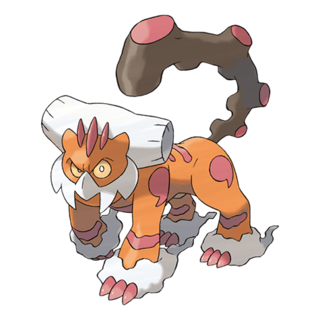 Therian Landorus
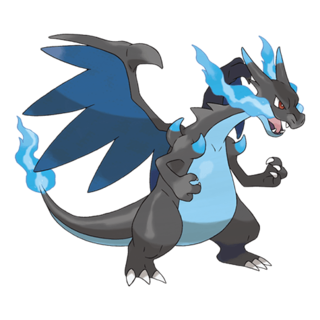 Mega X Charizard
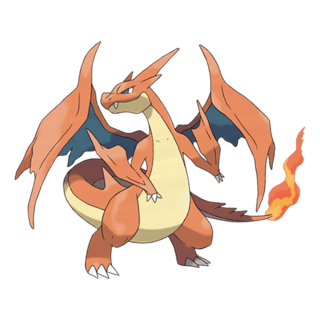 Mega Y Charizard
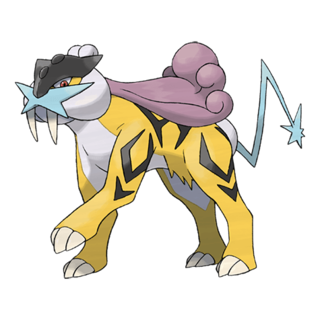 Shadow Raikou

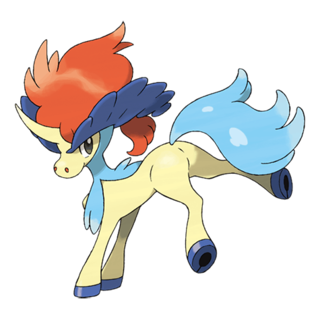 Ordinary Keldeo
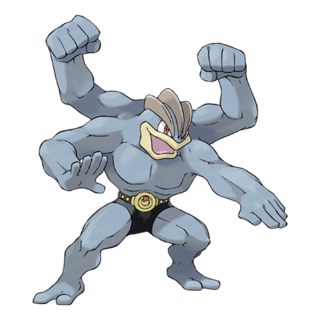 Shadow Machamp
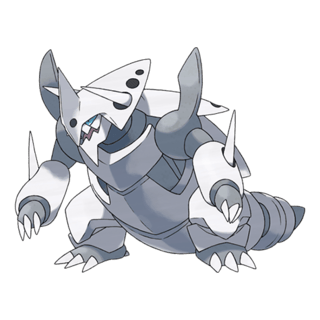 Mega Aggron
Steel
Mega Aggron
Steel


 Aggron
 Aggron
 Mega Aggron
